

Additive Manufacturing (AM), often referred to as 3D printing, is reshaping how products are designed, produced, and repaired. For engineers, additive manufacturing is not simply a new tool. It is a strategic capability that strengthens organizations and accelerates professional growth.
This article explains why additive manufacturing matters for organizations, how it creates value, and why developing these skills now gives engineering professionals a meaningful career advantage.
Why Additive Manufacturing Matters for Organizations
Global geopolitical shifts and rising trade uncertainty are pressuring Canada to strengthen its manufacturing base. Additive manufacturing is a practical lever for doing so, especially when the workforce has the skills to fully leverage it.
Additive manufacturing supports the Canadian economy by enabling manufacturers to:
- Localize production and reduce dependence on distant suppliers
- Shorten lead times for low volume, high value, and mission critical components
- Enhance responsiveness across sectors such as automotive, aerospace, defence, and medical devices
- Improve supply chain resilience during trade disruptions or global shortages
However, machines alone cannot deliver these benefits. Skilled professionals are needed to:
- Embed additive manufacturing into existing supply chains
- Ensure additive manufacturing systems are turned into reliable production assets
- Validate materials and processes
For Example: Nicholson Manufacturing, a leader in forestry‑industry machinery is using hybrid manufacturing, which combines additive and subtractive techniques, to boost production efficiency and enhance product performance. You can read more about this example here.
The Importance of Additive Manufacturing Training for Organizations
There are several major families of additive manufacturing processes, each offering different strengths, limitations, and applications. Below is an overview of the most commonly used types of processes:
- Vat Photopolymerization: Produces extremely high-resolution parts with smooth surface finishes.
- Material Jetting: Enables multi-material printing and full colour, realistic prototypes.
- Binder Jetting: Allows fast production of large parts without the need for structural supports.
- Powder Bed Fusion: Creates strong, functional end use parts in polymers or metals.
- Material Extrusion: The most accessible and cost-effective method using widely available thermoplastic filaments.
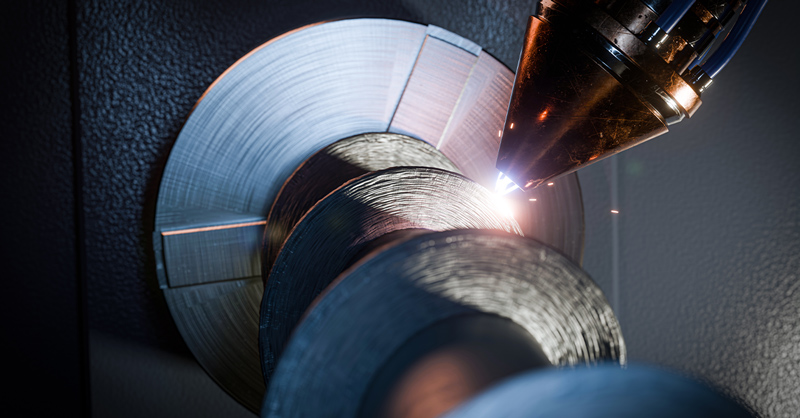
- Directed Energy Deposition (DED): Ideal for repairing existing components and adding material to metal parts.
- Sheet Lamination: Bonds layers of dissimilar materials quickly and at a low cost.
Because of this, diverse, modular, industry aligned training courses that cover additive manufacturing fundamentals, design considerations, material behaviour, and process selection are needed. These skills help the workforce move confidently from prototype concepts to qualified, production ready parts.
Well trained teams make faster, safer, and more economically sound decisions about when and how to use additive manufacturing. This translates into:
- Accelerated Innovation Cycles: A team fluent in AM can overcome traditional tooling constraints, moving from a concept to a functional prototype at a quicker pace.
- Supply Chain Resilience: An AM-capable team allows an organization to reduce reliance on external vendors and mitigates the risks of long lead times or discontinued spare parts.
- Reduced Material Waste: Unlike traditional subtractive manufacturing (milling/turning), a team trained in additive processes focuses on near-net-shape production, which may significantly lower raw material costs and environmental impact.
- Agile Tooling & Fixturing: Instead of waiting for costly custom jigs or molds, a trained team can produce internal manufacturing aids quickly, keeping traditional production lines running more efficiently.
- Informed Technology Investment: A knowledgeable team can accurately perform cost-benefit analyses and justify the return on investment for new equipment, ensuring the organization invests in the specific AM family that fits its long-term goals.
In short, investing in targeted additive manufacturing training multiplies technology return on investment and builds long-term resilience in a volatile global landscape.
Why This Matters for Your Career Development
For engineers and technical professionals, additive manufacturing literacy is becoming a differentiator.
Understanding what can be done, what should not be done, and how to make the right additive manufacturing decisions is now critical across many professional roles, including:
- Engineers and designers at any level who want to broaden their manufacturing knowledge
- Career pivoters moving into additive manufacturing focused roles
- Decision makers evaluating additive manufacturing for product development or manufacturing workflows
It is especially relevant to professionals in mechanical, aerospace, defence, biomedical, healthcare, and civil or structural fields. AM training supports job functions in design, research and development, manufacturing, tooling, and quality assurance.
Training in additive manufacturing will benefit your career in a few key ways:
- Futureproofing & Versatility: AM is not just a niche skill; it is a cross-functional discipline. Training allows engineers to work with software developers and material scientists, making them indispensable in hybrid manufacturing environments.
- Strategic Capability: Specialized training prepares individuals for a variety of roles involving additive manufacturing, such as Project Manager or Applications Engineer, where they must build business cases and justify the return on investment for adopting new technologies.
- Salary and Mobility: AM skills enhance professional marketability to the technical complexity of the work. This expertise provides a versatile foundation for pivoting between high-tech industries (e.g., moving from automotive prototyping to aerospace production).
In a competitive profession, additive manufacturing skills place you ahead of peers who rely solely on traditional manufacturing knowledge.
|
OSPE has partnered with CAMufacturing Solutions Inc. to offer an introductory course in additive manufacturing.
Register now |


By: CAMufacturing Solutions Inc.



Leave a Comment