


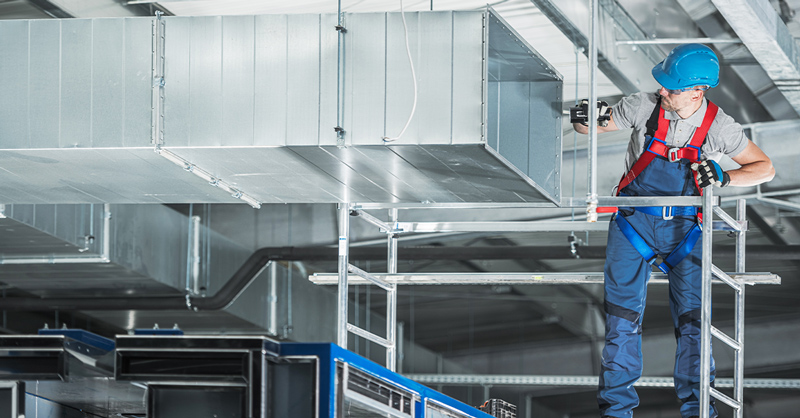
Safe air quality in industrial workplaces has become a critical priority. As regulations strengthen and facilities handle increasingly hazardous materials, engineers must understand how ventilation systems protect workers and support compliance.
The main value of expanding knowledge in industrial ventilation lies in understanding the fundamentals that apply across diverse industrial settings. These fundamentals support individuals and organizations that are involved directly, or indirectly, in projects of any scale.
A strong technical knowledge base helps professionals understand how industrial ventilation systems function and make informed decisions when identifying proper solutions for new projects or existing systems.
This knowledge leads to better evaluations, clearer decision making, and stronger air quality management within industrial facilities.
What You Will Learn From this Article:
- The responsibilities engineers carry in workplace air quality
- Why strengthening ventilation fundamentals supports better decision making
- How industrial ventilation controls harmful contaminants
- The Ontario regulations that influence exposure control
- The ventilation strategies used to address complex industrial challenges
- How energy use and system optimization support decarbonization and cost savings
Engineers’ Responsibility in Air Quality Management
Professional engineers contribute widely and often directly to safe working conditions in industrial facilities.
They must address workers’ exposure to respirable and inhalable dust, gases, mists, and vapours to comply with increasingly stringent Occupational Health and Safety (OHS) regulations.
Stringent OHS regulations related to toxic and hazardous materials, such as silica, lead, and asbestos, make it especially challenging for facilities handling these substances to achieve and maintain compliance with air quality standards. Regulations have placed stronger responsibilities for air quality management on owners and project stakeholders, increasing the importance of engineering-based decision making.
Industrial Ventilation as the Primary Control Method
For engineers, industrial ventilation is a strong solution for maintaining safe air quality.
Local capture systems help prevent fugitive emissions such as respirable dust, and well-designed HVAC systems supply fresh air to the workplace.
Unfortunately, many systems are poorly designed or poorly maintained. When this occurs, air quality declines and worker exposure exceeds permitted limits.
That’s why understanding how ventilation systems should operate and why they fail is essential for engineers to diagnose problems, implement valuable solutions, and ultimately control contaminants.
Regulatory Requirements in Ontario
Engineers also need to learn the basics of industrial ventilation to gain a clear understanding of the regulations that apply to workers’ exposure in Ontario. These include requirements such as Time Weighted Averages (TWA) and Short-Term Exposure Limits (STEL).
Knowing which responsibilities apply to engineering professionals ensures that sufficient air quality considerations are informing decisions throughout facility design, operation, and maintenance.
Technical Challenges Across Industrial Settings
Knowledge of ventilation systems is also essential for an engineer because industrial ventilation systems can vary significantly and present multiple technical challenges. Engineers may need to ventilate complex equipment, manage hot processes, or control toxic or flammable contaminants.
In these cases, they must know how to select the most appropriate ventilation strategy, whether this involves general ventilation by dilution, ventilation by displacement, local or specific ventilation. Strong technical fundamentals allow individuals and organizations to make informed decisions for new projects and existing systems.
Energy Use and Opportunities for Optimization
Being trained to work with ventilation systems can also be a financial asset for an organization. Industrial ventilation and fresh air compensation systems require large amounts of energy for heating and air conditioning. These systems often come at a major expense.
With increasing focus on decarbonization, reviewing design criteria and optimizing system performance can produce meaningful energy efficiency gains and significant long-term savings.
Industrial Sectors Where Ventilation Is Essential
Many industrial sectors depend heavily on effective ventilation. These include:
- Mining and critical minerals
- Metallurgy and primary metal plants including aluminum, smelting, and refining
- Forestry, sawmills, lumber mills, wood pellets, and engineered wood facilities, including wood panels, oriented strand board, and medium-density fibreboard
- Pulp and paper
- Agrifood including sugar refineries, feed mills, and agro-industrial operations
- Port terminals and facilities
- Food and beverage processing
- Pharmaceutical
- Chemical
- Manufacturing including shipbuilding, aerospace, machinery, and technology products
- Cement plants
- Emerging technologies and decarbonization solutions including biofuels and biocarbon or biochar
- Energy including power plants
These sectors demonstrate the widespread need for strong industrial ventilation knowledge, making expertise in ventilation a valuable career advantage.
|
Continue building these skills through practical, real-world examples by participating in OSPE’s Industrial Ventilation training this May.
Register now |

By: Hugues Châteauneuf, P.Eng., Subject Matter Expert for BBA Consultants, and Farzam Allafchi, P.Eng., Ph.D., Senior Computational Fluid Dynamics Application Engineer for BBA Consultants


Leave a Comment