


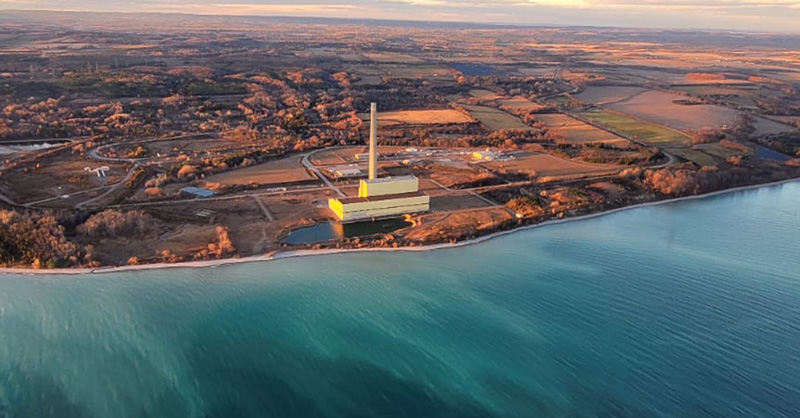
OPG’s Wesleyville site in Port Hope (Image: OPG)
Ontario is serious about growing the nuclear energy sector. Ontario Power Generation is considering a Wesleyville site, located on Lake Ontario east of Port Hope, for new nuclear development. Earlier this year, OSPE submitted formal feedback to the project’s Impact Assessment process. It is the kind of opportunity that does not come around often, and the engineering community had things to say.
Here is what we put forward, and why it matters.
What is the Wesleyville Project?
The Wesleyville site is a proposed location for new nuclear generation in Ontario.
The site is being evaluated through a federal Impact Assessment process, which requires proponents to identify issues, assess alternatives, and demonstrate how the project will serve the public interest over its lifespan. These assessments are long, technical, and consequential. The decisions embedded in them shape infrastructure for decades.
That is precisely why OSPE engaged.
Our Core Argument: This is not Just an Electricity Project
The central point in OSPE’s submission is one that gets missed in most nuclear conversations: nuclear plants produce far more energy than they convert to electricity. In a conventional electricity-only configuration, the substantial thermal output produced is simply discharged as waste. Ontario has been doing this for years, and we think the Wesleyville project is an opportunity to do something smarter.
Most of Ontario’s energy demand is not electricity. It is heat for buildings, industrial processes, and district energy systems. Thermal networks, including cogeneration, district heating, geo-exchange, and waste heat recovery, can address that demand more efficiently and at lower cost than electrifying everything from scratch. Countries like Finland and Switzerland have integrated nuclear-powered district heating into their energy systems to much success. The technology exists. The engineering is understood. What is often missing is the planning horizon to design for it from the start.
OSPE’s position is that the Wesleyville project should be evaluated from the outset as both an electricity source and a strategic thermal asset within Ontario’s evolving energy system. Decisions made now about site design, infrastructure layout, and regulatory scope will determine whether thermal integration is possible. Once a site is built for electricity-only operation, retrofitting it for thermal cogeneration is expensive and technically constrained. The window to get this right is during planning, not after the concrete is poured.
Gender-Based Analysis Plus (GBA+): Equity Belongs in the Engineering Assessment
OSPE also flagged the importance of Gender-Based Analysis Plus (GBA+) as a tool for the Impact Assessment. Large energy infrastructure projects have historically concentrated economic benefits in some communities and distributed costs and impacts unevenly across others. A rigorous GBA+ lens asks who benefits, who bears risk, and who is meaningfully included in decision-making. OSPE endorsed GBA+ not as a procedural checkbox, but as a legitimate engineering and social equity consideration that should be integrated throughout the assessment.
Engineering Expertise in the Process
Both key points, the thermal opportunity and the equity framework, share an underlying premise: that the best outcomes from major infrastructure projects come when engineering expertise is embedded in the decision-making process early, not brought in after the key questions have already been settled.
Why OSPE does this
OSPE is Ontario’s engineering advocacy body. That means representing engineers wherever decisions are being made that will shape the infrastructure that Ontario depends on. The Wesleyville Impact Assessment is exactly that kind of decision point.
New nuclear is a generational investment. If Ontario is going to build it, it should build it right: with full consideration of what the site can offer beyond electricity, with equity built into the assessment framework, and with engineers at the table throughout.
We encourage you to continue the conversation on this topic by joining OSPE’s Online Community.




Leave a Comment